How Does Public Art Encourage Collective Experience?
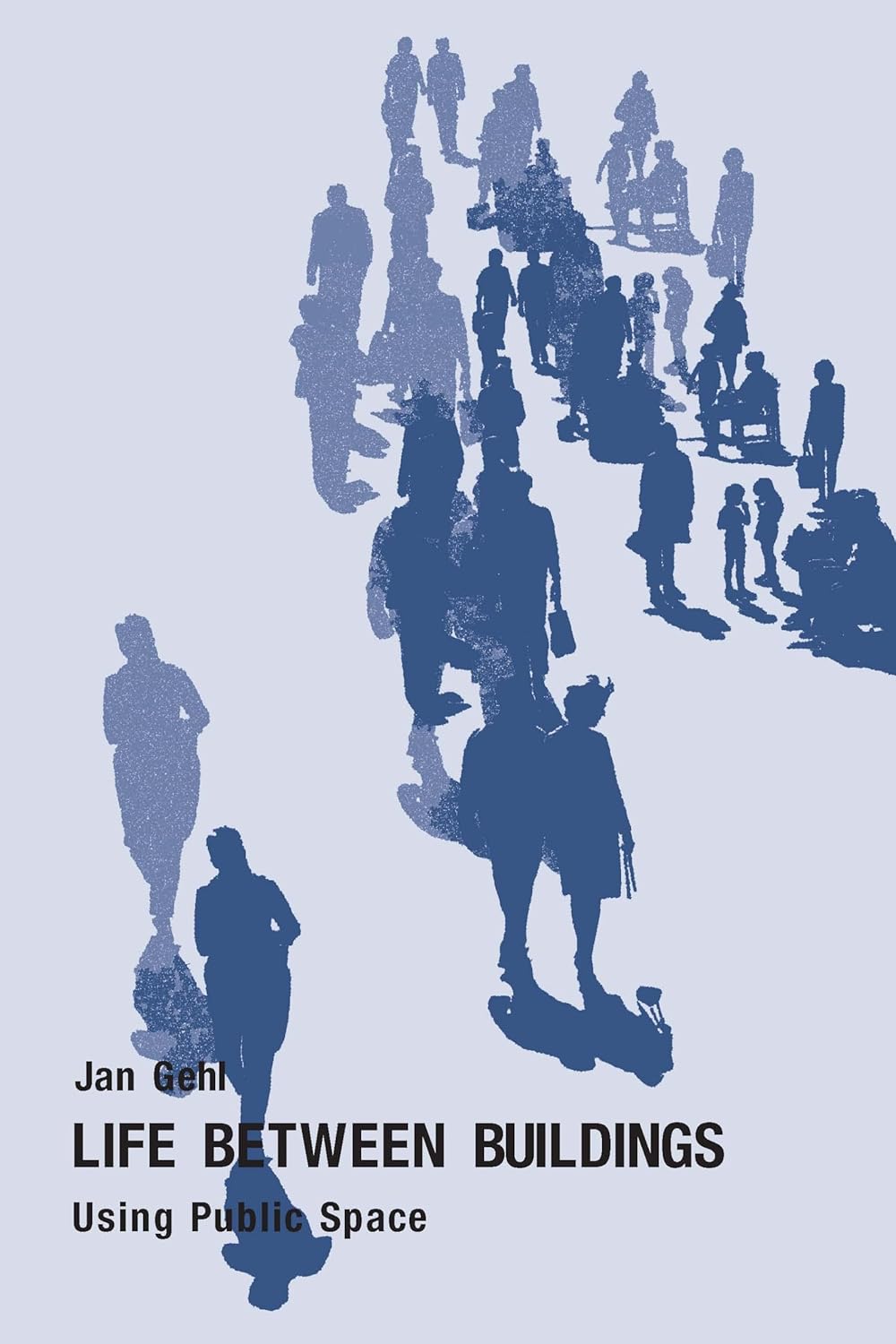
23-04-2026Source: Life Between Buildings (2011). Published by Island Press.
We often talk about the impact our artworks have on people individually, however, perception in public space is social, shaped by the presence and behaviour of others. What we notice and how we engage is influenced by those around us.
In Life Between Buildings, Jan Gehl describes how shared environments are activated through human presence. Being among others, seeing and hearing them, adds meaning beyond the physical space. Public space is therefore not static, but shaped by collective behaviour.
“Life between buildings comprises the entire spectrum of activities, which combine to make communal spaces in cities and residential areas meaningful and attractive.”
While Jan Gehl focuses on spatial conditions, his observations offer a useful lens for understanding the importance of public art. Activity gathers where conditions invite it, at edges, points of interest, and in spaces that support respite. Artworks can therefore operate as catalysts for these social behaviours.
Heightened tactility intensifies this effect – textured surfaces demand close attention, encouraging people to slow down. Because this pause is visible, it becomes shared, and viewers are temporarily aligned through attention without direct interaction.
As Gehl notes, “if spaces are desolate and empty… it can be very difficult to find places to stop. Or said in another way: good cities for staying out in have irregular facades and a variety of supports in their outdoor spaces.” Within this context, artworks contribute to spatial richness by creating focal points that encourage pause, observation, and conversation.
These dynamics are present across our work, where different scales of intervention shape how people gather and engage:
- How might an intimate sculpture such as Eyrie influence interaction between strangers within a confined setting?
- How can wayfinding installations such as Billboards interrupt movement and encourage shared discovery in a busy city?
- How does a large-scale mural such as L’Envol capture the attention of daily commuters and redirect their journey?
Public artworks transform individual perception into shared experience, aligning attention and shaping how people engage with space together.