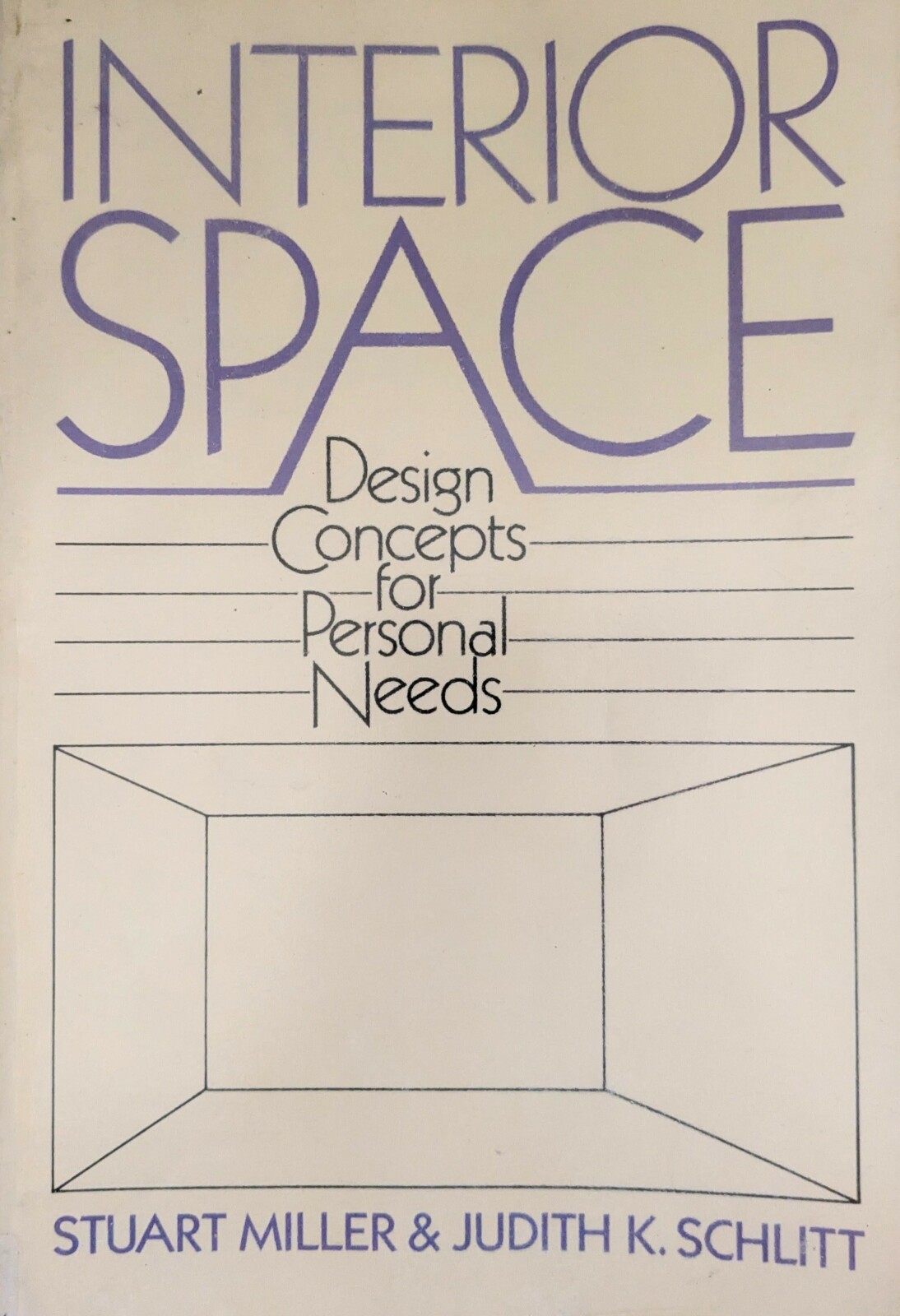
Designing for Human Needs: Reflections on Interior Space
08-12-2025At Giles Miller Studio, we’re constantly exploring how materials and form can enrich the human experience. Recently, I revisited a fascinating book ‘Interior Space: Design Concepts for Personal Needs by Stuart Miller and Judith K. Schlitt’ that takes a psychological approach to interior design. Published in the mid-80s, it still feels strikingly relevant today, especially when thinking about how our work connects with people on an emotional and sensory level.
What the book’s about:
Miller and Schlitt approach interior design not just as an aesthetic exercise, but as a way of fulfilling human needs. They identify nine psychological drivers, things like identity, privacy, security, variety, and aesthetics, and explore how these can be translated into design decisions. Instead of starting with a style or trend, their method begins with people: what they value, how they live, and what they need in order to feel at home.
A few takeaways really stood out:
Designing for identity – Spaces are an extension of who we are. Our environments can reflect personality and tell stories about their inhabitants.
Balancing order and variety – Humans crave both clarity and stimulation. Design has the power to provide grounding structure while also offering moments of surprise and richness.
The role of choice and control – Giving people agency in shaping their environment is central to creating places where they feel comfortable and empowered.
Collaboration as a process – The authors argue for active dialogue between designer and client, so that psychological needs aren’t just acknowledged but fully embedded in the outcome.
Why this matters to us:
Reading this, I couldn’t help but think about how closely these ideas align with our practice at Giles Miller Studio. Our work with surfaces, sculptural forms, and light play is all about crafting environments that speak to the senses and, ultimately, to the individual.
Our sculptures address the need for variety and aesthetic stimulation, transforming spaces as you move through them.
By designing artworks that carry depth and narrative, we help spaces express identity, whether that’s a hospitality venue seeking a unique atmosphere or a brand creating a memorable presence.
Collaboration with clients is key to everything we do, echoing the book’s emphasis on choice and control in the design process.
Final thoughts:
‘Interior Space’ reminds us that design is never just about filling a room with beautiful objects. It’s about listening, understanding, and translating human needs into spatial experiences. For us, this reinforces the idea that materials and surfaces can do more than decorate, they can connect, communicate, and even transform how people feel in a space.